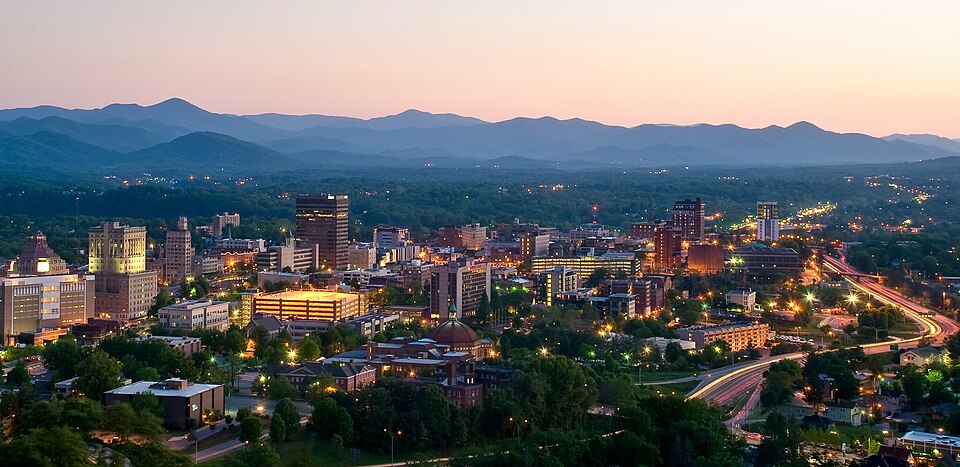
Real estate markets cycle. Values rise, pause, correct, and recover. Most markets follow the national pattern with minor local variation. Asheville — and specifically the North Asheville mountain corridor — has demonstrated a resilience that goes beyond simple price trends. It's rooted in a set of structural fundamentals that don't change with interest rate cycles or economic sentiment.
Understanding those fundamentals is useful for any buyer evaluating a significant real estate decision. It's particularly relevant in a market like today's, where elevated interest rates and a cautious post-cycle environment have created real opportunities for buyers who understand what they're buying and why the underlying value holds.
Six Structural Pillars of Asheville Market Resilience
Geographic supply constraint
Asheville sits in a mountain bowl. Buildable land is genuinely finite — not just expensive, but physically limited by topography, access requirements, and watershed protections. Unlike flat-terrain markets, you cannot simply expand outward when demand increases. Scarcity is structural, not artificial.
National lifestyle migration tailwind
Remote work normalization, sunbelt heat and insurance cost pressures, and the continued migration of high-net-worth retirees from coastal markets have created a sustained demand current flowing toward mountain communities. Asheville has been a named beneficiary of this trend for over a decade, and the drivers continue to strengthen.
Climate advantage at elevation
North Asheville's higher elevations offer measurably different climate conditions than the valley or the coast — cooler summers, excellent air quality, and the Blue Ridge's natural cooling effect. As climate considerations increasingly factor into relocation decisions, elevation-premium properties gain a structural advantage that wasn't as prominent a decade ago.
Culture and quality-of-life infrastructure
The Asheville food, arts, music, and outdoor scene is consistently recognized at a national level disproportionate to the city's size. This cultural capital attracts a high-income, high-education demographic that has historically supported property value stability across market cycles.
Medical infrastructure investment
Mission Hospital, now AdventHealth, is a Level II Trauma Center and regional medical hub serving a multi-county area. The continued expansion of medical facilities and the growth of healthcare as a major Asheville employer brings stable, high-income residents — and provides the healthcare access that is a primary concern for retiring buyers choosing a long-term home.
Low inventory at the top of the market
The luxury tier in Asheville — particularly attached and low-maintenance homes with views — has chronically under-supplied demand. The combination of limited buildable land, restrictive municipal approval environments, and high construction costs means that new inventory at this price point is rare. Reynolds Mountain represents one of the few significant luxury additions to North Asheville in years.
Why Elevation Matters More Than Most Buyers Realize
Within the Asheville market, not all addresses are equal — and the elevation differential matters in ways that compound over time.
Properties at higher elevations in North Asheville consistently command and retain price premiums. The reasons are straightforward: the views are better, the climate is more pleasant, the sense of place is more distinct, and the supply is more constrained. A property on Reynolds Mountain doesn't compete with the same buyer pool as a valley townhome. It occupies a different tier.
Reynolds Mountain Villas compounds this elevation advantage with the guaranteed west-facing view orientation of every Summit Collection villa. This isn't an incidental feature — the site was specifically designed to ensure each unit captures the long-range Blue Ridge panorama. In a market where "mountain views" frequently means a partial ridgeline glimpse from an upper-floor bedroom, the distinction is material.
"Where else can you get a 7½-acre backyard, minutes from downtown Asheville, with those views? The land is done. What's here is what there will be."
— Harold Kessler, Developer, Reynolds Mountain Villas
The Spring 2026 Context
The current market environment rewards buyers who understand fundamentals. Higher interest rates have cooled the speculative enthusiasm that defined 2021 and 2022, which is actually healthy for buyers making long-term decisions. The frenzy buyers and the panic sellers are mostly gone. What remains is real demand meeting real supply at prices that reflect actual value.
For the buyer evaluating Reynolds Mountain today, the calculus is direct: the structural fundamentals that support value — geographic scarcity, lifestyle migration, climate premium, cultural infrastructure — are all intact and strengthening. The spring market awakens in April. The inventory in the Summit Collection is limited. Buyers who act before April are acting before the competition arrives.
The Asheville Story Continues
The national real estate market has its cycles. Asheville has them too. But the mountain — the physical geography, the cultural investment, the demographic tailwinds — doesn't participate in those cycles the way an interchangeable suburban subdivision does. It has its own logic, its own set of buyers, and its own definition of value.
Reynolds Mountain sits at the top of that hierarchy. Not just physically, but in terms of the combination of attributes that have historically defined durable luxury real estate value: irreplaceable location, genuine scarcity, exceptional quality, and a lifestyle offering that can't be manufactured somewhere else.
That's what built to last actually means.
Reynolds Mountain Villas — Available Now
Two collections. One iconic North Asheville address. The spring market starts in April — the time to schedule a tour is now.
- Summit Collection from $1.15M — panoramic views, move-in ready
- 28-Unit Collection from $895K — mountain views, customize your finishes